A dive into the complex supply chains of hazelnuts
Some products have become so commonplace and accessible that we rarely stop to consider the complex supply chains hidden behind this apparent simplicity.
The world of nuts is one of complexity, controversy, exploitation, child labour, and a long history of scandals. The controversy surrounding hazelnuts first came onto our radar after watching an episode of Keuringsdienst van Waarde about hazelnut spread. Not long afterwards, we read a fascinating article in De Groene Amsterdammer about Ferrero (Nutella), its role in the hazelnut industry, and the large-scale pollution linked to its operations in Northern Italy.
An estimated 70% of the world's hazelnut production comes from Turkey, where Kurdish child labour remains a crucial part of the harvest season.
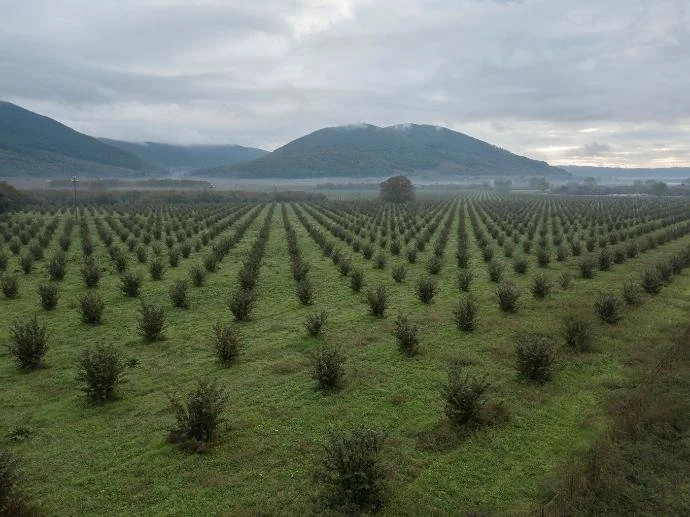
Lake Vico, encircled by hazelnut plantations that feed Ferrero's intensive hazelnut industry
With Altalanga, we have found a hazelnut producer that offers the kind of transparency we are looking for. True craftspeople, they combine their pioneering role as organic growers with forward-thinking research carried out in collaboration with several universities. Through Gianluca and Raluca, we know exactly where every hazelnut comes from, who worked the fields, who harvested the crop, and who handled the processing.
The founder, Gianfranco, is a retired insurance agent. After retiring, he started Altalanga out of a passion for hazelnuts, the region, and the land itself. People in the area thought he was crazy when they heard he wanted to do everything organically.
After planting hazelnut trees, it takes around seven years before they become productive. Due to climate change, that timeline has increased by roughly another two years. Today, Altalanga grows hazelnuts across 53 hectares of hillside terrain reaching elevations of up to 800 metres. At the moment, the hills of Piedmont are covered in snow, while the hazelnuts will only be harvested in August. At Altalanga, all hazelnuts are sun-dried. This avoids the “thermal shock” caused by mechanical drying, which can diminish the nuts' aromas. Altalanga employs 13 people: five working in the fields and eight in the processing facility.
What makes it all even better is that these are the most delicious hazelnuts we have ever tasted. A win-win-win!
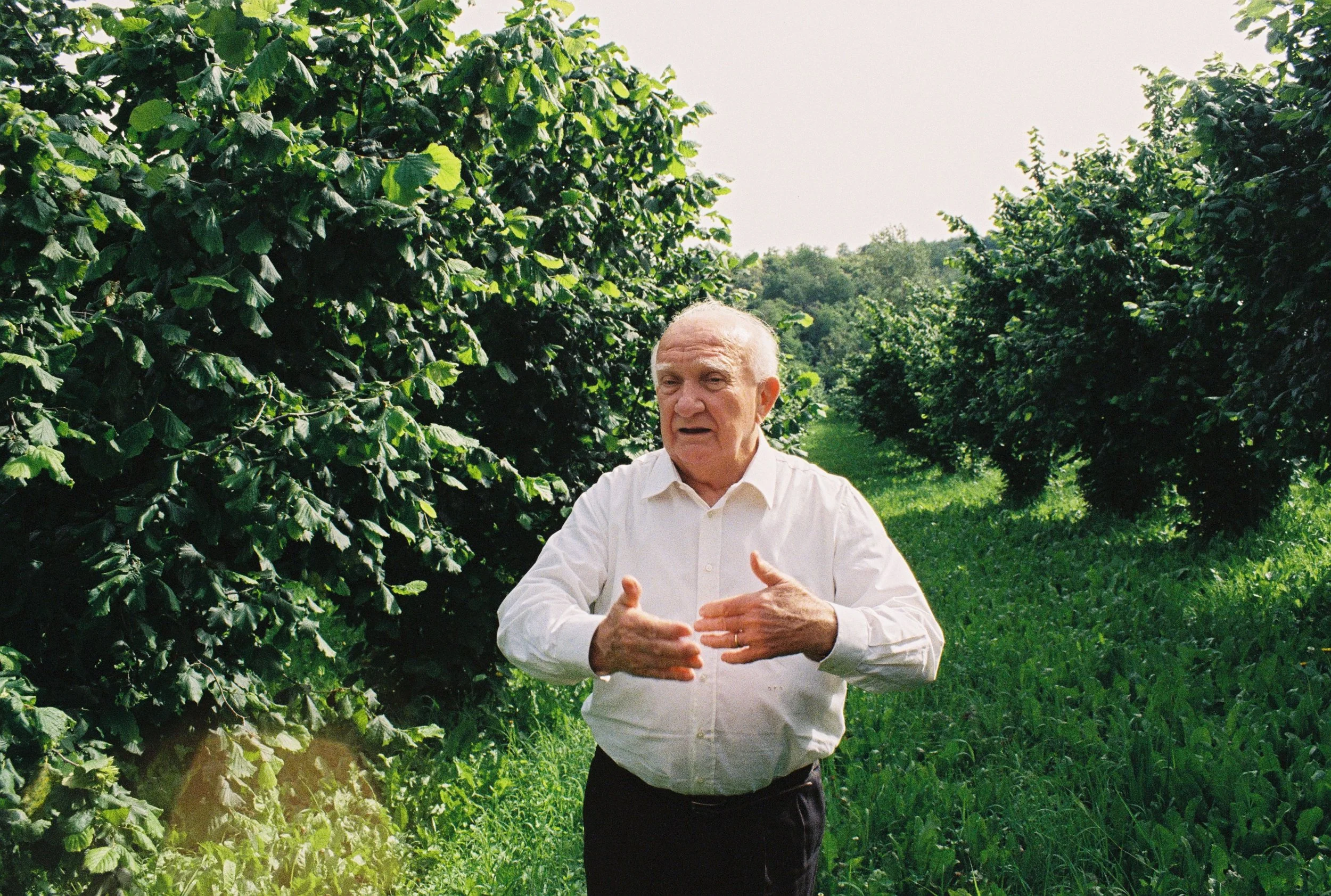
Gian Franco (founder) between the Altalanga hazels
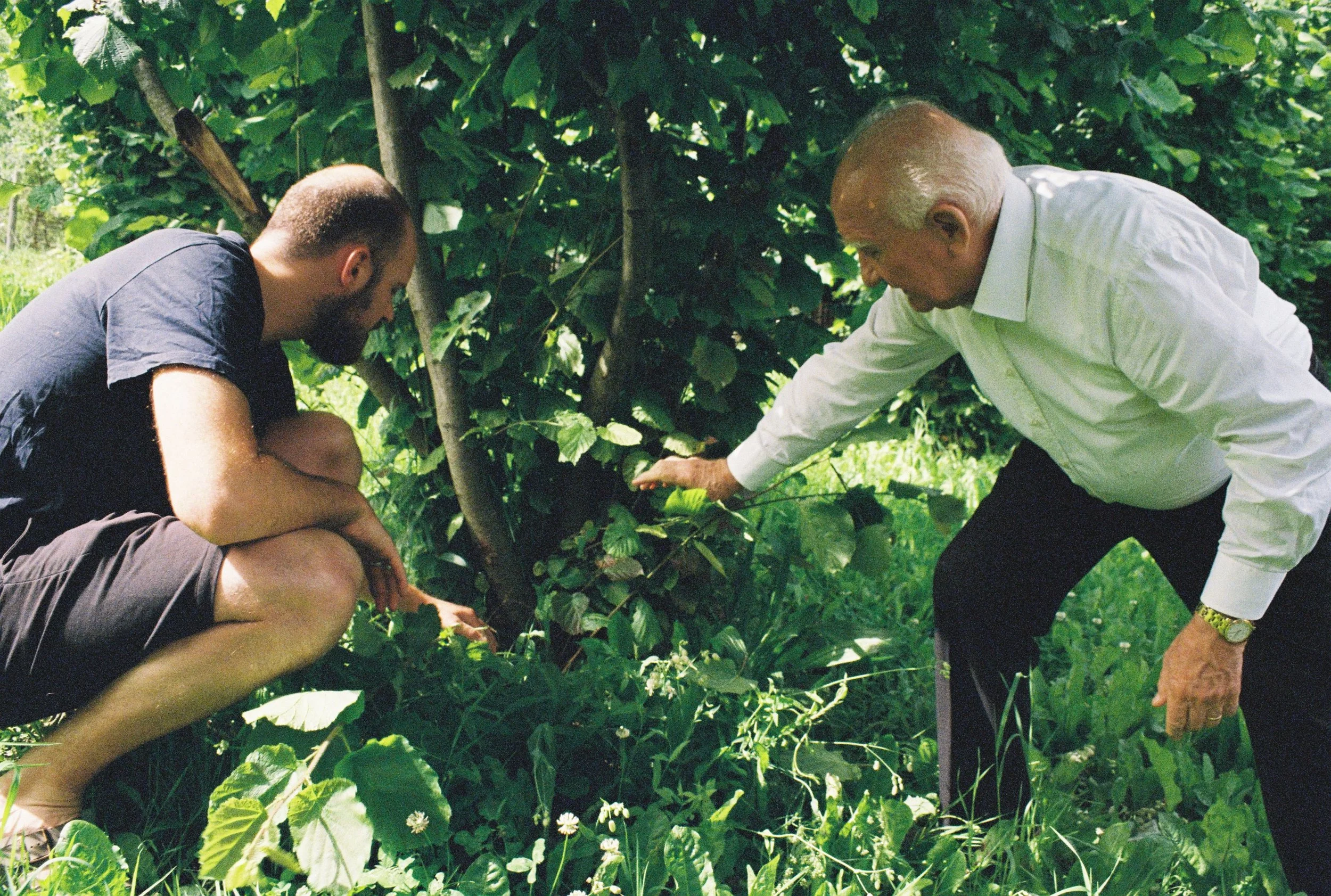
Cid and Gian Franco
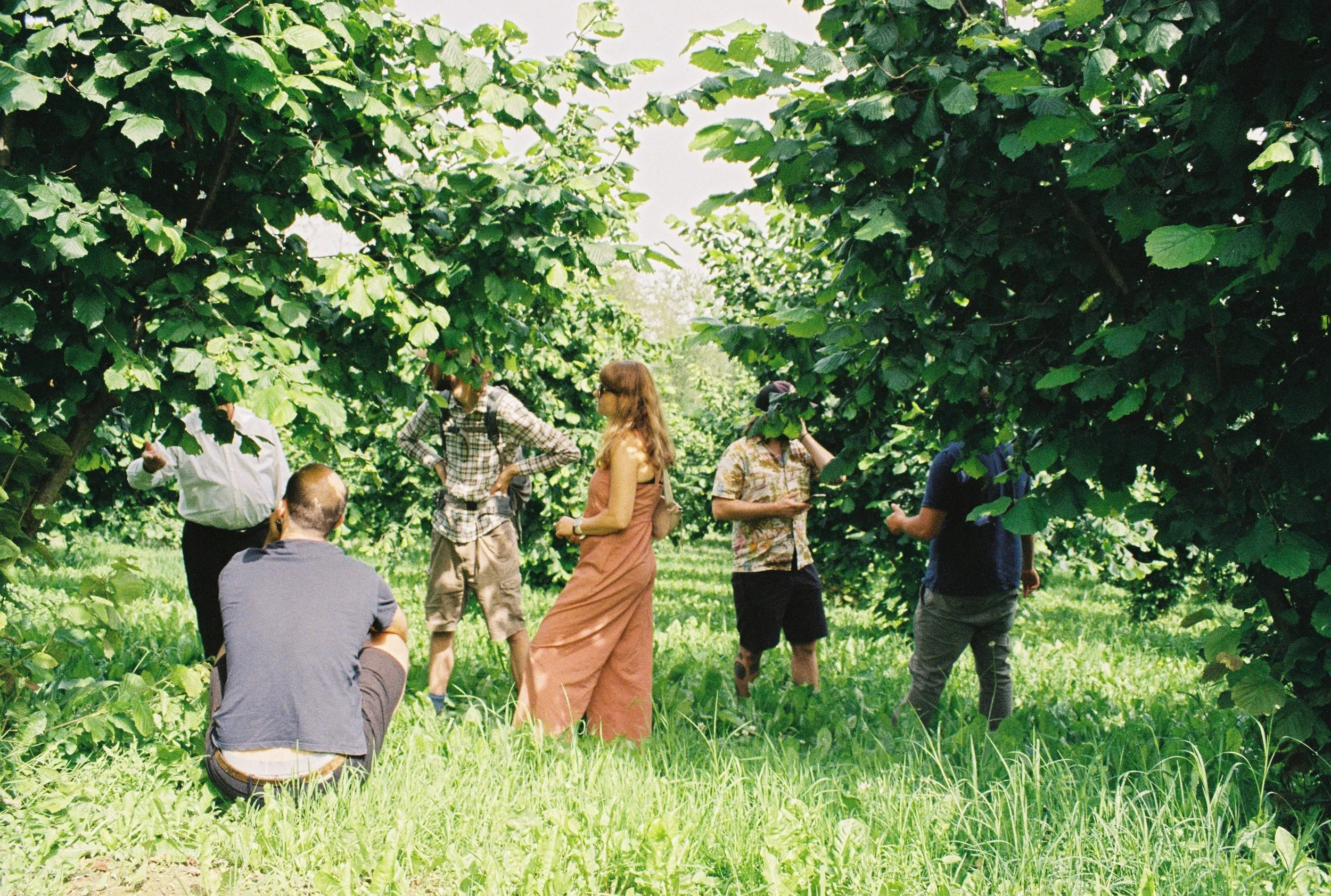
Our team at Altalanga