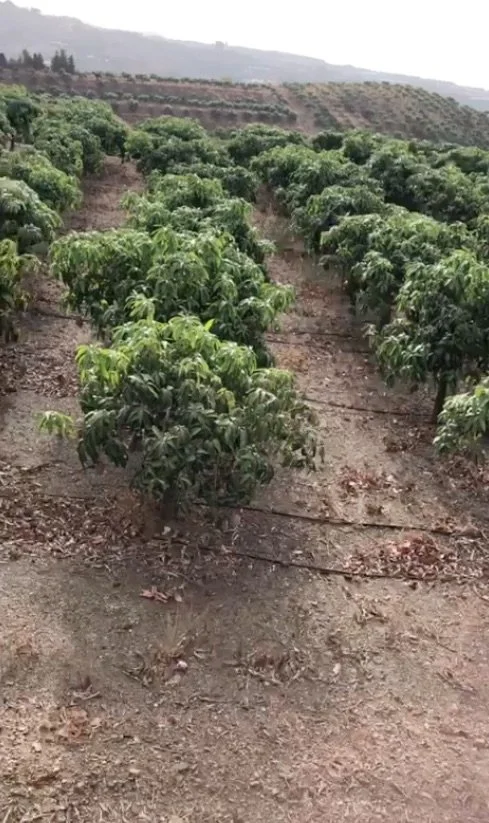
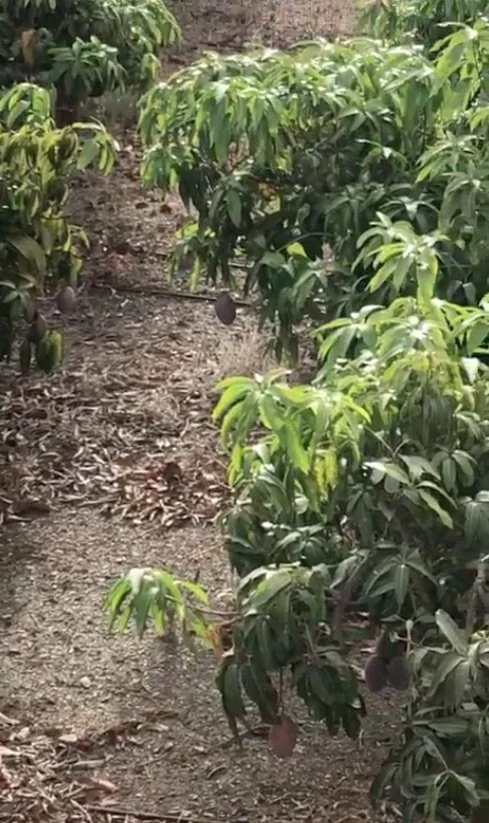
Not the mangoes, but the farm.
Because, in a way, it tells the whole story.
Our farmers do remarkable work. They all farm organically, and many go far beyond what organic standards require. They experiment, share knowledge, and keep exploring new ways to create places where both food and nature can thrive.
Within our small-scale network, this can sometimes seem normal, even self-evident. But it really isn't. That's why we want to take a moment to reflect on the difference our farmers are making.

Jésus, son of a conventional farmer
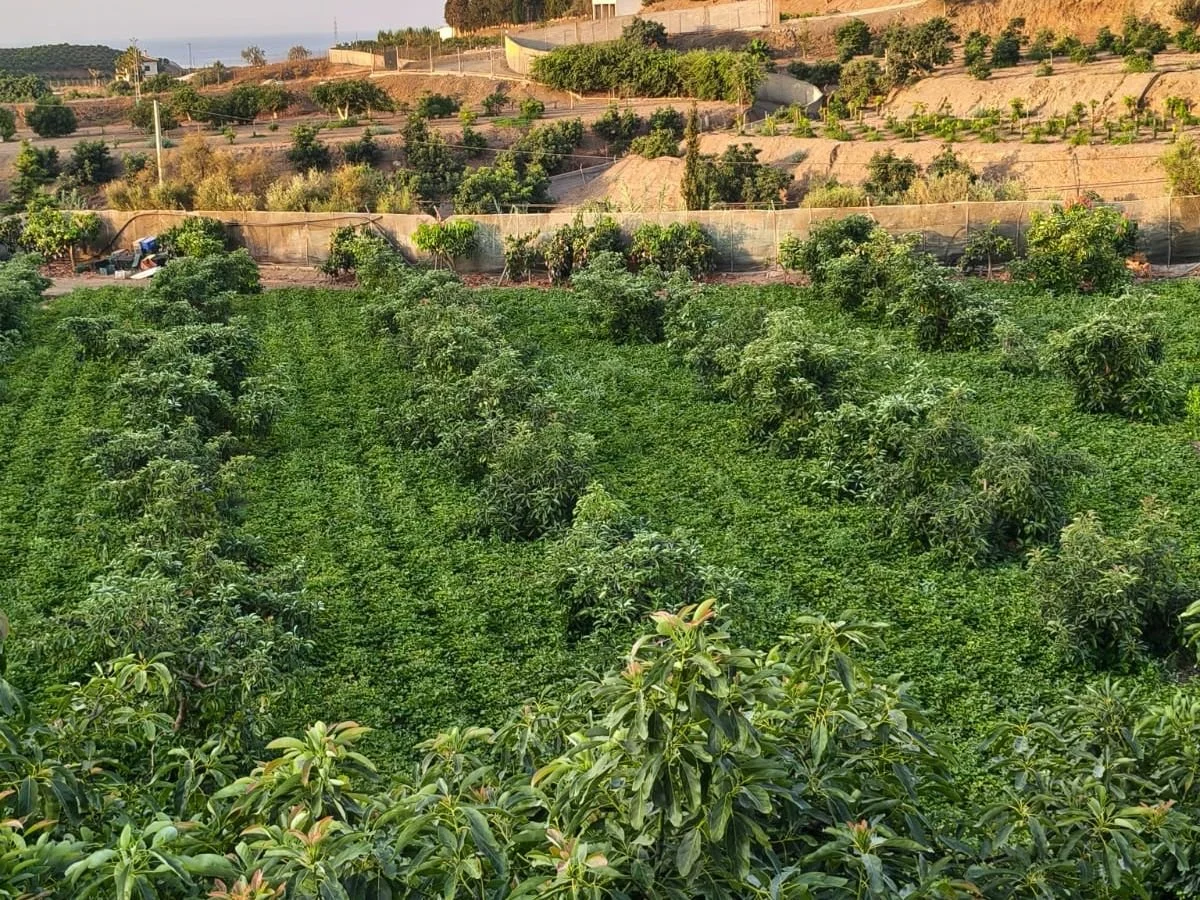
The organic farm of Jésus with mango trees
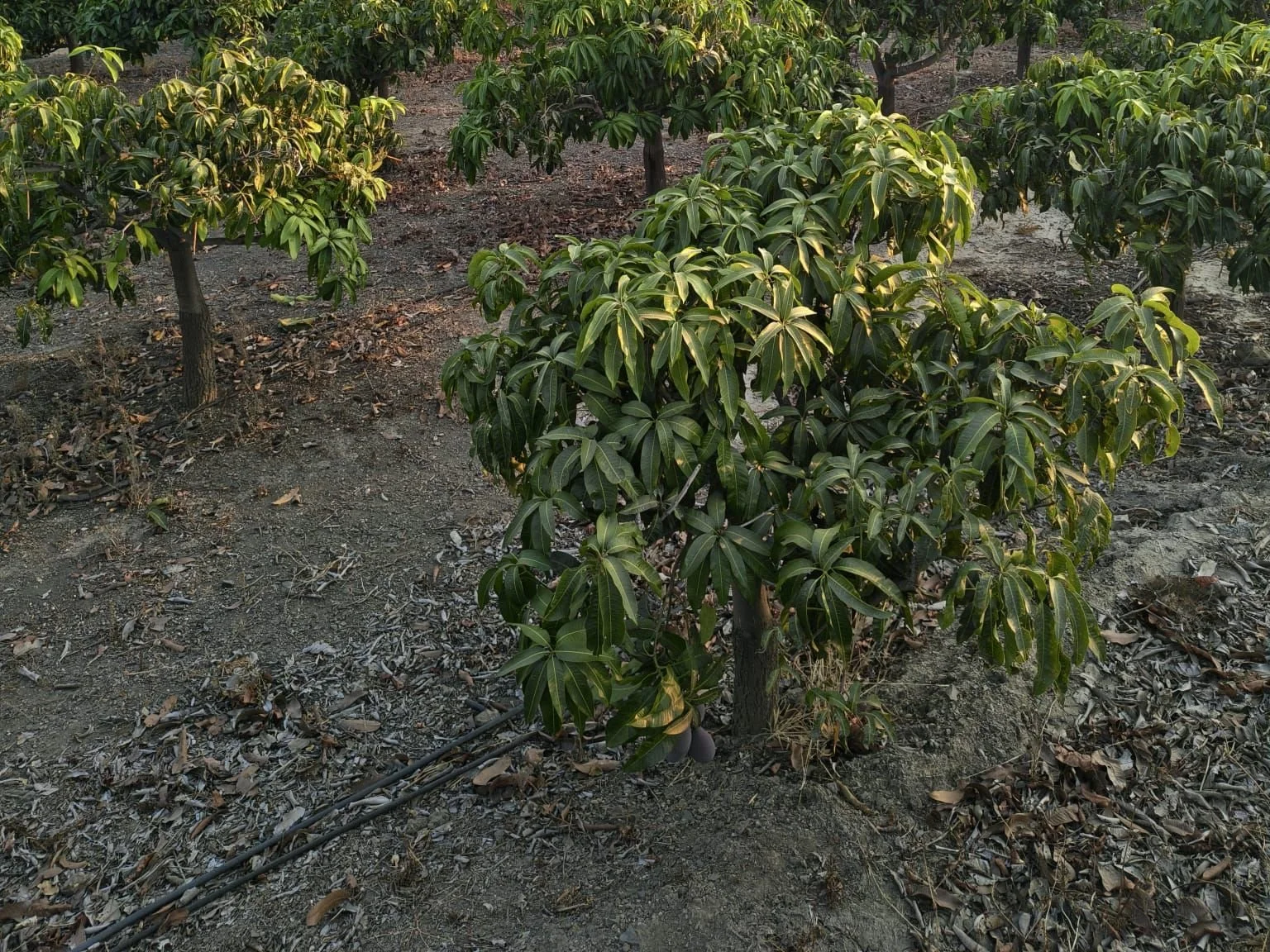
The conventional mango orchard of Jésus’ neighbour
We asked Jesús to tell us a bit more about the way he farms, specifically about his mango trees, as we are right in the middle of mango season.
First of all, he always keeps his soil covered in order to protect it from the relentless Andalusian sun. He does this either by leaving plant residues (leaves, roots, and other organic matter) on the ground to decompose naturally, by growing companion crops such as the sweet potatoes we were selling in recent weeks between the mango trees, or by using cover crops: herbs, shrubs, legumes, and other plants that benefit the soil and are rotated from year to year.
This ground cover helps retain moisture in the soil, provides shade, and keeps soil temperatures lower. As a result, it creates a habitat for insects: earthworms, bees, beetles, ladybirds, and many others. These, in turn, act as natural allies in controlling pests. More life in the soil also means healthier, more fertile land — and ultimately more nutrients in our food (mangoes!).
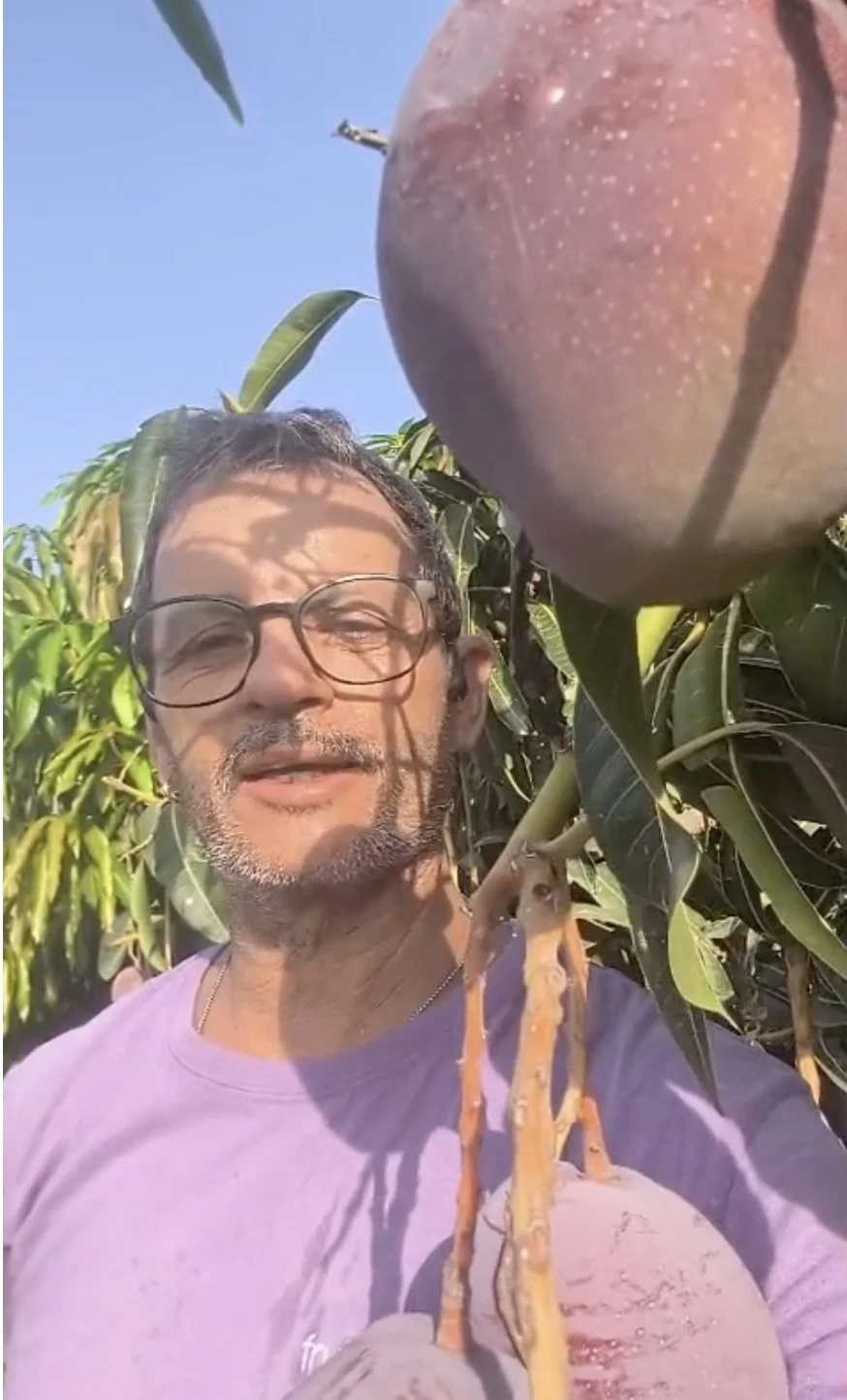
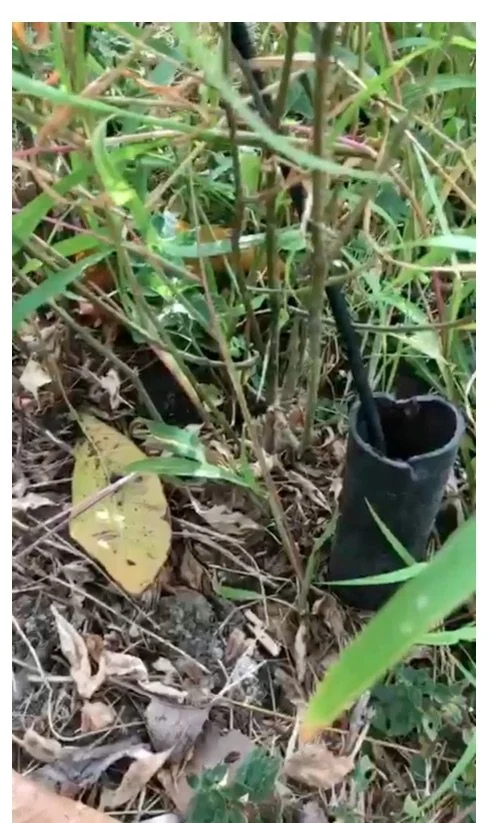
In addition, Jesús uses a special irrigation system that runs 30 to 40 centimetres below the surface. This reduces evaporation and ensures that the water reaches the trees directly. It is particularly well suited to mango trees, whose roots grow deep into the soil rather than spreading widely near the surface.
And what does it look like next door?
There, the soil is far from alive — herbicides reign supreme. The ground is completely dried out and heavily compacted; not even an earthworm could wriggle its way through it. And if one did dare to try, it would probably overheat. Without any ground cover, this farm also consumes enormous amounts of water.
Yet the trees look healthy and highly productive. How is that possible? They receive everything they need through irrigation: micronutrients, macronutrients, and various chemical fertilisers designed to make the plants stronger and more productive."Like little junkies," as Rafa put it after visiting the farm and capturing footage for us.